MeetingCostCounter

Are you sure you want to delete team?
Confirm
$0.00
H: 00  MIN: 00  SEC: 00
Awaiting metrics...

The Ultimate Corporate Meeting Cost Counter

In modern enterprise environments, time is literally money. The Meeting Cost Counter provides immediate visibility into the real-time financial impact of corporate meetings. Understand the true cost of your time and drive efficiency across your organization.

How to Calculate Meeting Cost

A "quick 30-minute sync" doesn't just cost time; it costs hundreds of dollars in direct salary allocation. By inputting attendee salaries, hourly rates, or contractor fees, our real-time meeting cost tracking tool accurately computes the financial burden of every calendar invite. Perfect for Agile sprint planning, daily standups, board meetings, and 1-on-1s.

Improve Your Meeting ROI

Creates a culture of accountability and financial transparency. If a scheduled meeting isn't generating more value than the live cost ticking up on this dashboard, it should probably be an email. Bookmark this page as your essential set-and-forget corporate productivity companion.

Meeting ROI and Financial Tracking

The True Cost of Inefficient Meetings: Measuring Leadership Drain and Opportunity Cost

In macroeconomic corporate environments, meetings are frequently treated as a free, infinite resource rather than an active, heavily taxed capital expenditure. A recurring thirty-minute daily sync or a mandatory weekly hour-long status update is rarely scrutinized through a strict, uncompromising financial lens. However, when macro-level organizations stop to actively calculate the combined hourly rates of every single participant sitting in the conference room or dialing into the video call, it becomes overwhelmingly apparent that internal meetings are consistently one of the most expensive operational investments a company makes on a daily basis. The aggregate financial liabilities are staggering when viewed at scale across an entire fiscal year.

The total financial drain of an unproductive meeting extends significantly beyond the baseline salaries and direct compensation of the attending staff. The real, compounding damage to an organization's bottom line is hidden deep within the opportunity cost. Advanced Opportunity Cost Analysis dictates that every single hour that a senior software engineer, a highly specialized marketing director, or an enterprise C-suite executive spends sitting passively in a poorly structured meeting is an hour they are actively restricted from executing on high-leverage, revenue-generating tasks.

This specific, highly toxic phenomenon is formally known as Leadership Drain. When essential corporate leadership time is systematically drained by repetitive informational cross-talk, basic administrative housekeeping, and low-level status updates rather than strategic, high-level decision-making, the entire organization's forward momentum inevitably slows down. Consequently, overall corporate profitability and output metrics suffer dramatically. Furthermore, Leadership Drain severely demoralizes top-tier performers who routinely feel their specialized expertise is being entirely squandered on performative calendar attendance rather than impactful, needle-moving execution.

Auditing Your Culture and Eliminating Macro-Level Financial Waste

To fundamentally improve internal Meeting ROI (Return on Investment) across a complex enterprise, organizations must undergo a rigorous, top-down cultural shift. This requires moving aggressively away from a highly inefficient "default to meeting" mindset and instead heavily favoring a streamlined "default to asynchronous" operational methodology. Before blindly sending out a multi-person calendar invite, meeting organizers should rigorously ask themselves whether the actual objective of the gathering is to simply share background information, brainstorm new creative concepts, or make a definitive final execution decision.

Recommended Tool
Monday.com
Streamline your workflow and cut out unnecessary syncs by utilizing powerful asynchronous management tools.
Check Price

Implementing Agile Frameworks for Maximum Capital Efficiency

If the designated goal is purely informational, it definitively belongs in a concise email, a detailed Slack update, or a highly focused recorded Loom video. Live, synchronous meetings must be aggressively and exclusively reserved for active, real-time collaboration and strictly necessary final decision-making protocols. Implementing structured Agile Frameworks for Capital Efficiency can permanently and positively transform this detrimental dynamic. Enterprises that demonstrably excel at macro-level organizational time management frequently adopt core operational principles from established Agile methodologies to drastically streamline their entire internal communication stack.

Strict time-boxing constraints, mandatory clear agendas distributed at least twenty-four hours in advance of the start time, and explicit, culturally supported "opt-out" policies empower key employees to comfortably decline calendar invites where their active, highly vocal contribution is not strictly required. By proactively utilizing visual financial tracking tools like the Meeting Cost Counter in the background of active calls, development teams and executive management gain immediate, visceral, and highly accurate feedback on exactly how much corporate capital is actively burning every single minute the meeting runs over its initially allotted schedule.

Ultimately, fully justifying your operational meeting budget requires total financial transparency at every tier of the business. By continuously, objectively, and rigorously evaluating the true necessity, the optimal duration, and the precise required attendee list of your recurring calendar events, management teams can successfully reclaim thousands of hours of entirely lost staff productivity. Protect your organization from unchecked Leadership Drain by ruthlessly enforcing a modern corporate culture that intrinsically values uninterrupted, deep work over passive, highly expensive attendance. Making the live financial impact highly visible changes employee behavior instantly and permanently across the corporate hierarchy, turning wasted administrative hours into measurable, highly profitable output.

Hybrid working and remote collaboration

Navigating the Hybrid Meeting Era: Eradicating Presence Disparity and Building Distributed Equity

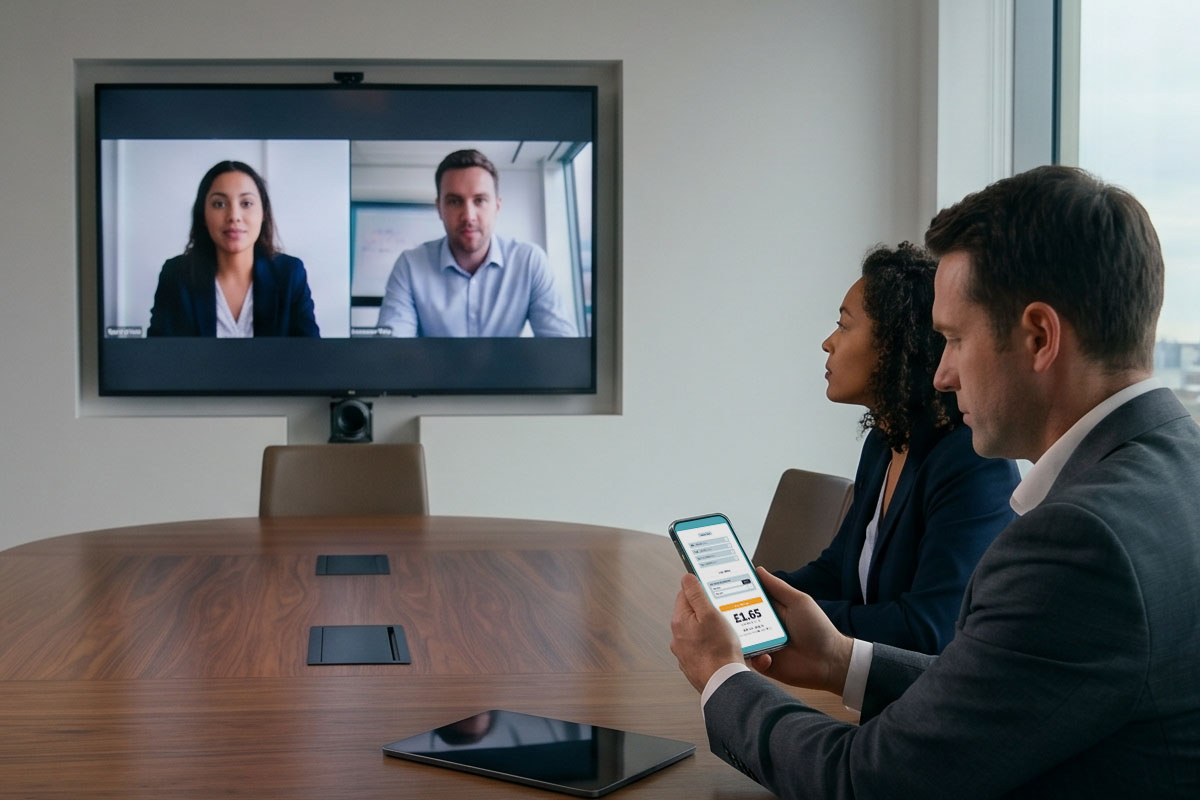
The permanent, macroeconomic global shift toward heavily decentralized hybrid work structures has fundamentally and irrevocably altered how distributed, modern enterprise teams collaborate on a daily basis. We are no longer entirely isolated within centralized physical corporate offices, nor are we uniformly operating on a fully remote basis across the board. Instead, modern Fortune 500 enterprises and agile startups alike frequently exist in a highly fractured, asymmetrical state. Half the operational team sits closely together around a physical conference table, while the remaining half dials in remotely through a highly fragmented grid of digital video squares. This specific, unique logistical dynamic creates a significant, persistent, and highly detrimental collaborative challenge widely recognized by organizational researchers as Presence Disparity.

Presence disparity occurs naturally, and frequently subconsciously, when in-room participants inadvertently dominate the organic, high-speed flow of the strategic conversation. Because of their physical proximity, they share off-camera side jokes, easily read localized micro body language, or utilize physical dry-erase whiteboards that simply aren't highly legible on the compressed, latency-heavy digital screen. This asymmetrical dynamic inadvertently and rapidly turns remote attendees into highly passive, second-class observers rather than equal, fully active participants. The inevitable result is a severely damaged two-tiered organizational system that slowly but certainly erodes fundamental trust, drastically limits communication efficiency, and destroys overall team cohesion over extended periods of time.

Overcoming this deep-seated infrastructural issue requires a highly deliberate, aggressive combination of strict behavioral shifts and comprehensive, enterprise-grade technological upgrades to absolutely ensure Equity in Distributed Teams. Creating a truly equitable, flawlessly collaborative environment for absolutely everyone, entirely regardless of their physical geographic location, is the modern hallmark of highly successful remote management. Radically upgrading your essential physical hardware and your synchronous digital software stack is the completely non-negotiable first step in repairing this heavily broken dynamic.

Upgrading Your Essential Hardware and Synchronous Software Stack

First and foremost, your physical corporate meeting room hardware must aggressively adapt to the new hybrid reality. Relying on a single, hollow-sounding, low-budget laptop microphone placed haphazardly at the far end of a long, acoustically reflective boardroom table is simply no longer an acceptable standard for professional enterprise-level operations. Organizations that genuinely care about maintaining remote equity and driving top-tier productivity must invest heavily in 360-degree smart tracking cameras, high-fidelity multidirectional boundary microphones, and ultra-clear, massive secondary displays to bring remote workers visually into the physical room.

Recommended Tool
Miro Boards
The ultimate digital whiteboard for hybrid teams aiming to completely eliminate presence disparity.
Try for Free

Enforcing the "One Remote, All Remote" Corporate Protocol

Furthermore, on the software side of the equation, strictly standardizing the entire company on highly interactive digital whiteboards ensures that all creative ideation and strategic planning happens in a completely neutral, cloud-based space. In this environment, remote workers have the exact same level of granular access, high-definition visibility, and immediate input capabilities as those stakeholders physically sitting inside the boardroom. Enforcing the "One Remote, All Remote" operational protocol is another absolutely critical mechanism for guaranteeing long-term organizational success and cultural cohesion.

Many highly progressive tech companies and forward-thinking enterprises have formally adopted this specific operational philosophy into their core company handbooks. Under this incredibly strict behavioral model, if even a single key stakeholder or junior employee is dialing into the sync from a home office or external remote co-working space, every single person sitting in the physical corporate office must also independently open their laptop and join the video call individually. This seemingly simple, highly effective administrative rule instantly levels the digital playing field, ensuring every single participant has their own dedicated camera feed and visual real estate.

This mandate guarantees crystal-clear, isolated audio input and completely direct, unhindered access to the digital chat window, thereby completely eliminating the highly exclusionary, localized dynamic of the main physical conference room table. Truly mastering hybrid work over the long term means completely mastering the art of asynchronous communication platforms. By actively, continuously, and aggressively building a corporate culture dedicated to meticulous written documentation—where key strategic decisions, regular project updates, and operational statuses are heavily recorded in centralized wikis—agile teams can confidently reserve their highly expensive, synchronous video calls solely for the most complex problem-solving scenarios and vital organizational team bonding exercises.


Team wellness and overcoming burnout

Battling 'Zoom Fatigue' and Mitigating Cognitive Overload in the Modern Workplace

In the relentless, high-pressure corporate push for increasingly higher output metrics and maximum daily productivity, organizational leaders frequently overlook the massive psychological and physiological friction caused by thoughtlessly scheduling back-to-back virtual meetings. Cognitive Overload is absolutely not just a trendy corporate buzzword or an excuse for low performance; it is a heavily researched, highly documented, and severely detrimental neurological phenomenon. Continuous, high-definition video conferencing artificially forces our human brains into an entirely unnatural state of cognitive overdrive.

During these sessions, we are constantly required to process incredibly intense amounts of asymmetrical non-verbal physical cues. This includes desperately trying to read slight micro-expressions across compressed digital video feeds, subconsciously managing imperceptible audio delays that severely disrupt natural conversational flow, and battling constant, highly unnatural self-evaluation through staring continuously at our own brightly lit camera feeds. Over time, this intense, unyielding focus leads directly and undeniably to severe cognitive burnout and adrenal exhaustion by the end of the standard digital workday. Historically, the traditional physical office environment provided highly natural, built-in biological buffers to effortlessly reset the mind and properly prepare the nervous system for the next complex task.

The simple, physical act of walking from your cubicle down the long hall to a boardroom, grabbing a quick coffee from the corporate breakroom, or chatting briefly with a colleague in the elevator provided absolutely crucial, vital moments of necessary neurological decompression for highly busy employees. In the modern virtual working world, however, a high-stakes, incredibly stressful presentation abruptly ends at exactly 1:59 PM, and the next intense strategy session begins immediately at 2:00 PM with absolutely zero physical or mental intermission.

Crucial Strategies for Enforcing Healthy Systemic Boundaries

This complete, devastating lack of biological transition time keeps the central nervous system permanently locked in a constant, unbroken state of hyper-arousal. This rapidly and dangerously accelerates long-term employee burnout across the entire organization, leading to massive drops in baseline productivity. Implementing rigorous, data-driven Zoom Fatigue Mitigation strategies is absolutely essential for survival. Crucial strategies for enforcing healthy systemic boundaries must be strictly and unapologetically implemented from the executive C-suite level down to aggressively protect the highly vulnerable remote workforce.

Recommended Tool
Burnout Status
Track your team's mental well-being, monitor engagement levels, and effectively prevent remote meeting fatigue.
Take 1 minute test

Actively Monitoring the Real Psychological and Economic Impact

Companies must urgently implement mandatory default scheduling rules across the entire organizational infrastructure. Standard 30-minute calendar meetings must be automatically reduced by the enterprise software to exactly 25 minutes, and standard hour-long meetings must be firmly, non-negotiably capped at exactly 50 minutes. These mandatory 5-to-10 minute physical buffers allow exhausted employees vital time to physically stretch, comprehensively rest their eyes from harsh, damaging monitor glare, and mentally switch complex contexts before the next demanding cognitive task begins.

Additionally, highly progressive organizations should strongly consider instituting dedicated "No Meeting Days" (such as Maker Tuesdays or Deep Focus Fridays) to consistently provide their highly-paid staff with unbroken, highly valuable blocks of deep, entirely uninterrupted workflow. Actively monitoring the real psychological impact of your meeting culture is the final, essential piece of the puzzle. It is absolutely vital for organizational leadership to actively and continuously monitor the steep emotional and economic toll that an "Always On" digital culture takes on their salaried staff.

Consistently high meeting volume is directly and inversely correlated with a sudden, sharp drop in daily job satisfaction and a subsequent, incredibly costly increase in overall employee turnover. If executive management suspects their remote or hybrid team is silently struggling under the heavy emotional weight of constant digital connectivity, they urgently need the proper, dedicated analytical tools to measure the problem accurately before it cascades. By intelligently combining strict financial cost tracking methodologies with advanced, deeply researched mental health metrics, forward-thinking companies can successfully build a highly sustainable, remarkably efficient, and genuinely healthy corporate culture that scales effectively into the future.

About Meeting Cost Analytics

Meeting Cost Analytics is dedicated to exposing the hidden financial drain within modern corporate environments. By providing transparent, real-time ROI tracking, we empower organizations to reclaim thousands of lost hours, optimize leadership schedules, and transition successfully to high-velocity asynchronous workflows.

For institutional inquiries, technical methodology documentation, or automated data processing requests, please direct all formal correspondence to our protocol desk: kestonstudios@gmail.com. Submissions are processed for administrative record-keeping based on technical priority.

Contact Us

For institutional inquiries, technical methodology documentation, or automated data processing requests, please direct all formal correspondence to our protocol desk: kestonstudios@gmail.com. Submissions are processed for administrative record-keeping based on technical priority.

Terms of Service

By using the Meeting Cost Counter tool, you agree to our standard terms of use. This tool is provided "as is" for informational and administrative purposes only. Users are solely responsible for the accuracy of the financial and organizational data they input locally into their browser sessions.

Privacy Policy

All calculations and data entered into the Meeting Cost Counter are processed entirely locally within your browser. We do not store, transmit, or record individual salary data or meeting metrics on external servers.

For institutional inquiries, technical methodology documentation, or automated data processing requests, please direct all formal correspondence to our protocol desk: kestonstudios@gmail.com. Submissions are processed for administrative record-keeping based on technical priority.

Affiliate Disclosure

Meeting Cost Analytics participates in various affiliate marketing programs. We may earn a commission on qualifying purchases made through external links placed within our editorial guides, Recommended Tool sections, and resource hubs. This monetization strategy helps maintain the calculator infrastructure.